 中文
中文 English
Comprehensive Analysis of Bicycle Rim Drain Holes: Functions, Quantity, Placement, and Impact on Strength
Many cyclists have questions about drain holes when selecting or modifying rims: What is the purpose of drain holes? How many are needed? How should the hole positions be chosen? Does drilling a hole in a finished rim reduce its structural strength? This article systematically addresses these questions related to drain holes, providing an objective reference for cyclists.
I. Main Functions of Drain Holes
The drain holes set on the rim sidewall serve multiple practical functions beyond merely draining water:
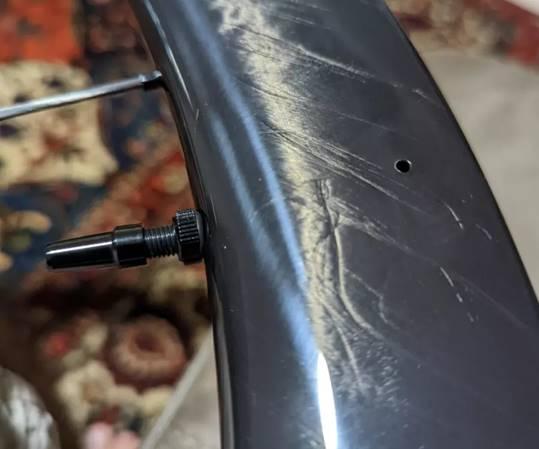
1.Rapid Water Drainage and Rim Protection
When riding in rain, crossing waterlogged sections, or washing the vehicle, moisture can enter the rim cavity through the valve hole, spoke holes, and the gap between the tire and the rim.

Accumulated water can compromise the wheel’s dynamic balance and add extra weight; long-term retention can promote microbial growth, leading to internal corrosion; in cold regions, frozen water can expand and potentially crack the rim.
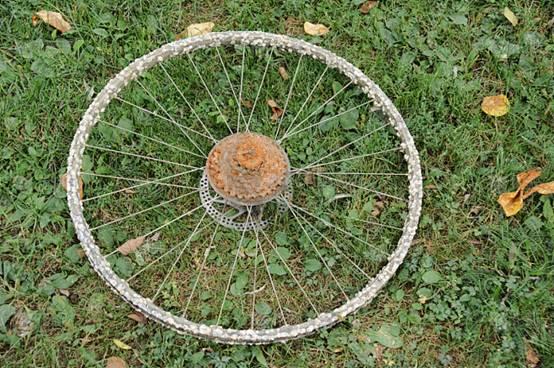
With drain holes, water can be automatically expelled by the wheel’s rotation, or an air gun can be used to quickly purge internal moisture and vapor, extending the rim’s service life.
2.Balancing Internal and External Air Pressure
Changes in ambient temperature (cooling from rain, heating from sun exposure) cause the air and water vapor inside the rim to expand and contract. Without a pressure equalization channel, tubeless tires may experience seal failure or bead lifting.
Drain holes facilitate rapid pressure equalization between the interior and exterior, while also aiding in smoother tire installation.
II. Impact of Drilling on Rim Strength
Theoretically, drilling a hole in a rim will have some impact on its strength, but with proper design and execution, the risk can be minimized to a very low level.
Carbon Fiber Rims: Drilling disrupts the continuity of the carbon fibers, creating potential stress concentration points at the hole location. In extreme cases, this could lead to interlayer delamination.
Other Materials (e.g., Aluminum Alloy) Rims: The impact of drilling on strength is relatively minor for these materials.
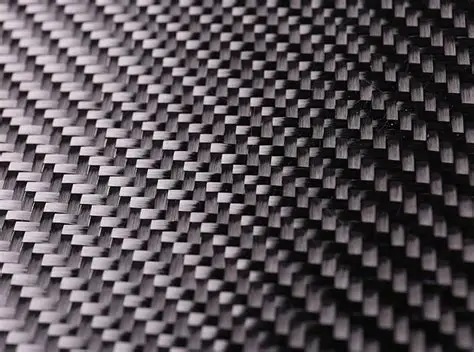
Current products/processes can control the impact on strength within a safe range by optimizing hole location, diameter, and shape, and by implementing local reinforcement around the hole, adjusting fiber layup, or adding local material.

Important Reminder: Non-professionals are strictly prohibited from drilling holes themselves.
III. Specifications for Drain Hole Diameter, Position, and Quantity
The dimensions, location, and number of drain holes directly affect functionality and rim safety:
Diameter
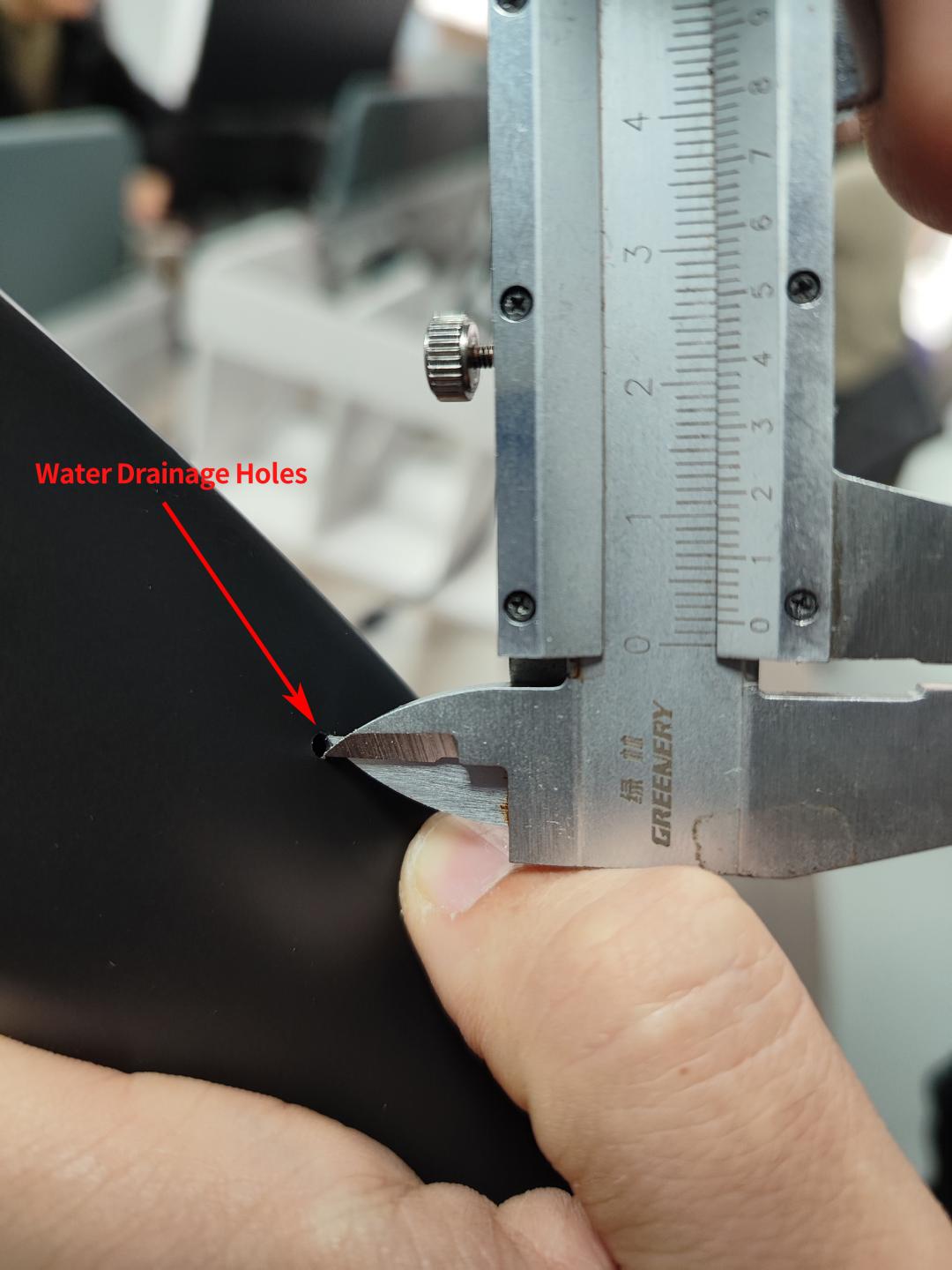
Recommended diameter: 2mm–3mm (commonly 2mm, 2.5mm).
This range allows for rapid drainage of water and fine sediment while avoiding excessive stress concentration caused by overly large holes; holes that are too small result in poor drainage, defeating their purpose.
Position
Typical hole location: Approximately 12mm from the top of the bead seat (may vary slightly depending on the bead structure of different rim models).
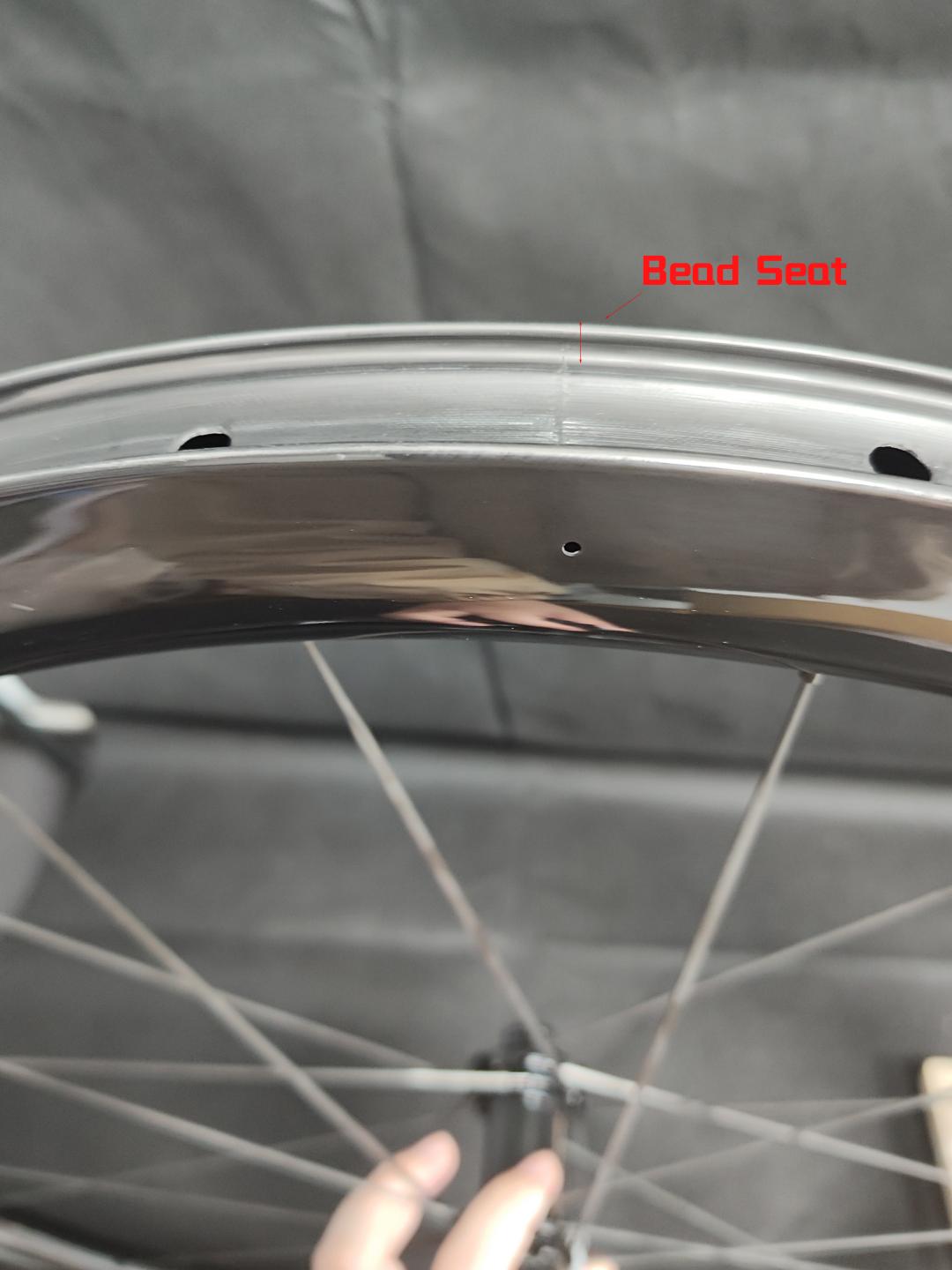
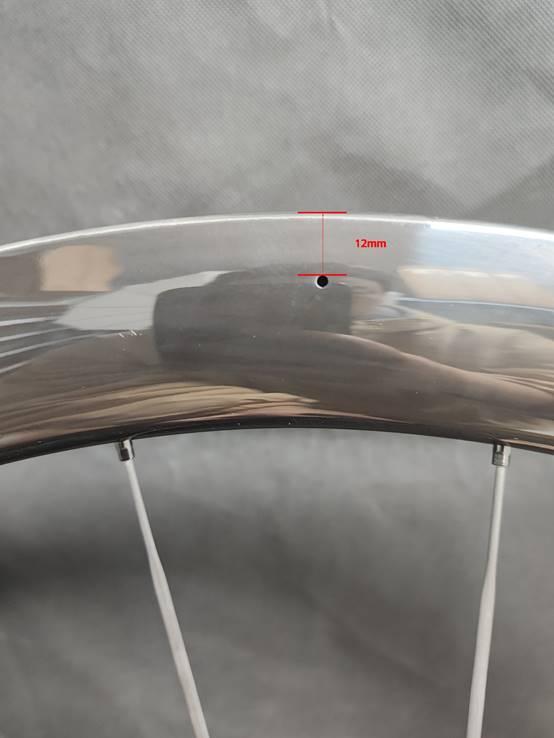
Usually positioned at the 12 o’clock (when the valve is at 6 o’clock), 3 o’clock, and 9 o’clock directions.
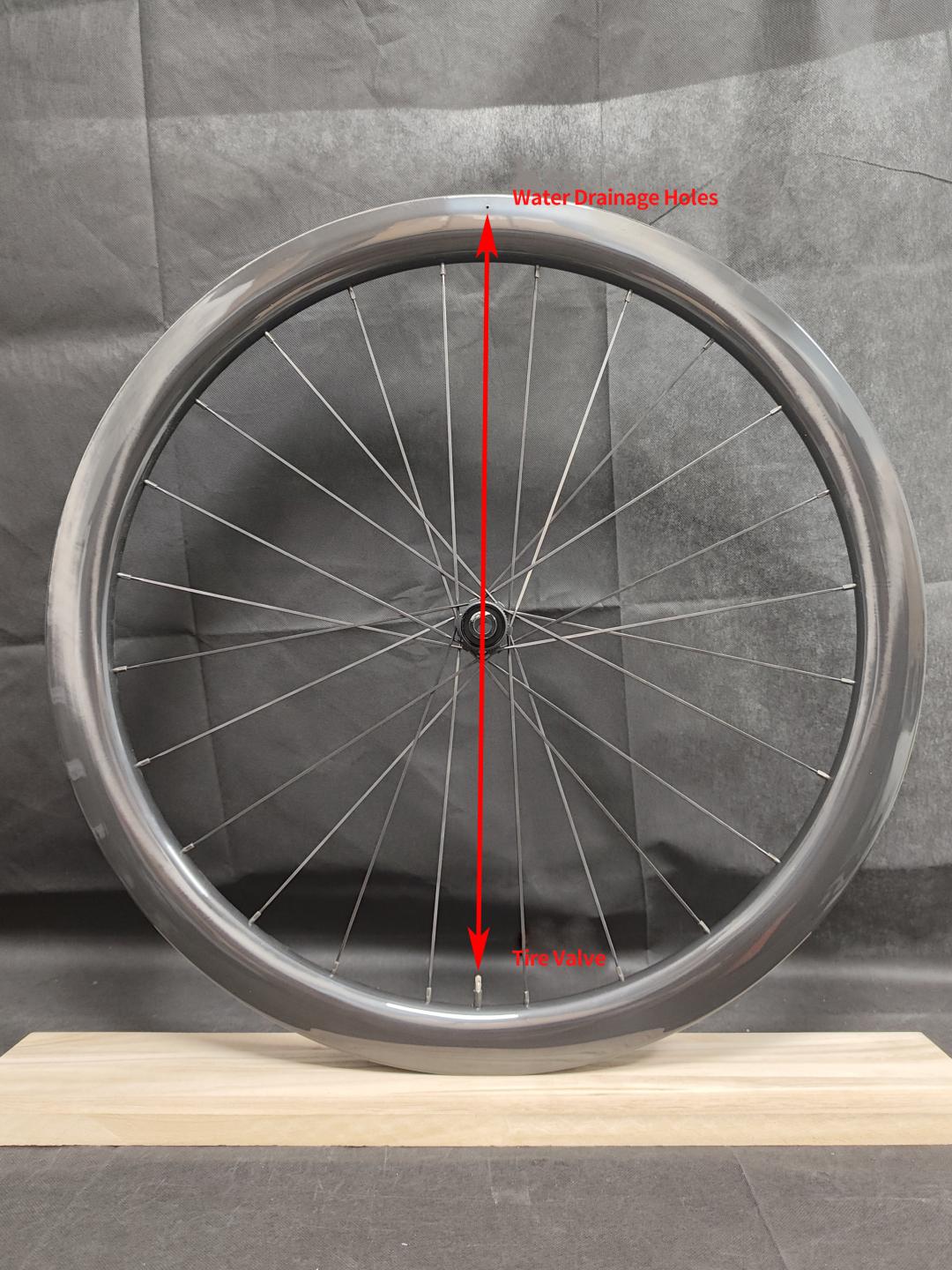
Drilling must avoid critical stress and functional areas such as spoke holes, the rim sidewall, the bead seat, the area around the valve hole, and the brake track.
Quantity
Standard rims: One drain hole is sufficient for typical usage.
Carbon fiber rims adhere to the “minimal hole principle”: fewer holes mean fewer stress points and less need for reinforcement.
Extra-deep section rims with large internal cavity volumes: Can be increased to 2 holes based on actual requirements.
IV. Is a Drain Hole a Necessary Feature?
Whether a drain hole is needed depends on the usage scenario:
Situations where a drain hole is recommended:
The rim and components like spoke nipples are susceptible to corrosion.
The rim has no other drainage pathway, making the drain hole the only outlet.
Deep-section rims with large internal cavities.
Frequent riding in rain, regular water crossing, or frequent washing.
Residing in an area with high rainfall or humidity.
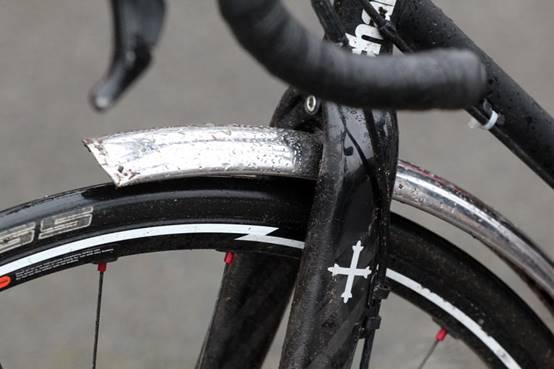

If the usage environment is dry and rainy riding is rare, a drain hole is not a necessary feature.
When purchasing rims, cyclists need not actively avoid models with drain holes. Properly designed drain holes do not add extra cost nor negatively affect normal use.